By 2030, global water demand is expected to exceed supply by 40%.
Yet the solution to that crisis may already be flowing through our cities’ sewers.
For decades, water has sat quietly in the background of climate conversations, overshadowed by energy, mobility and carbon. But water underpins them all – public health, food production, industry, ecosystems and increasingly the digital economy.
That reality is now catching up with us.
More than two billion people lack access to safe drinking water, while groundwater – which supplies roughly half of the world’s households – is being depleted faster than it can recharge.
At the same time, a new pressure is emerging: AI infrastructure. The rapid expansion of data centres is placing enormous new demand on water systems through cooling and power generation.
In other words, the future of AI is also a water story.
That is why circular water systems – treating wastewater as a resource rather than waste – are becoming one of the most important climate infrastructure solutions of the coming decades.
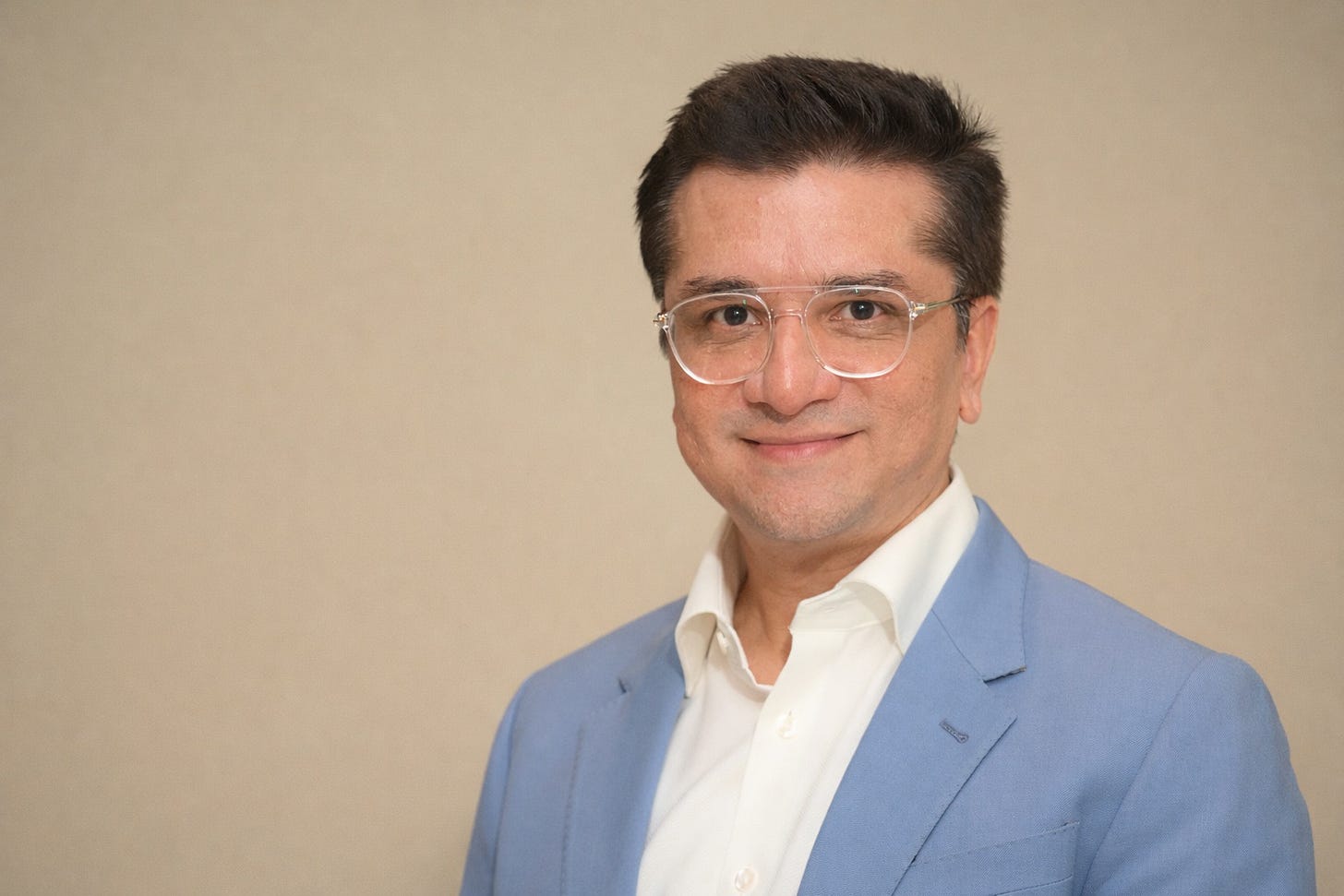
For The Green Techpreneur, I spoke with Dr Anand Vashi, Managing Director of Enviro Control — a top-15 global supplier of recycled water projects that has delivered more than 400 water treatment systems across India over the past 45 years.
Dr Anand Vashi has spent much of his career thinking about a resource most people rarely consider until it fails: water.
For more than four decades, Enviro Control has designed and operated treatment plants across India, quietly building one of the world’s largest operational wastewater reuse systems. Now, with a new innovation hub in the UK, Vashi believes the same circular water model could help modernise ageing infrastructure and prepare cities for a more water-constrained future.
Enviro Control has built one of the most compelling circular water stories in the sector – turning sewage into industrial-grade water, municipal revenue and long-term water security.
How did Enviro Control begin?
Our story started in academia. My father was an environmental engineering professor in the 1970s, when India was industrialising and new environmental laws were coming into force.
Industries began approaching universities for environmental assessments. But soon they started asking a simple question: if you design the treatment plant, who will build it? That led my father to leave academia and start a consultancy. Over time it evolved into designing, constructing and operating treatment plants across India.
What shaped the company’s early growth?
We worked on more than 200 industrial wastewater treatment plants across sectors like textiles, chemicals, fertilisers and pharmaceuticals. Every plant teaches you something new. Wastewater is complex and each stream behaves differently. So sustainability for us didn’t start as a concept. It came from decades of solving real engineering challenges.
When did the big turning point happen?
The major shift came in the mid-1990s when we moved from industrial treatment into municipal wastewater. India produces enormous volumes of sewage, and new regulations created the opportunity to rethink how that water could be treated and reused. That decision shaped the next three decades of our work.
Why do we need to rethink wastewater?
Most people think of wastewater as something to dispose of. But the average person uses about 150 litres of water per day, and 70–80% becomes wastewater. If untreated, it damages rivers and ecosystems. But if treated properly, it becomes a valuable resource.
You’re known for pioneering large-scale water reuse. How does that work?
In the city of Surat we produce 115,000 cubic metres of industrial-grade water every day from treated sewage.
Instead of discharging wastewater into rivers, we treat it using advanced filtration systems until the quality is extremely high. The municipality then sells that recycled water to textile industries. Industries get cheaper water, the city generates revenue, and freshwater resources are protected.
What impact has that model had?
Surat Municipal Corporation has generated more than £50 million in revenue from recycled water. We operate three large reuse plants that have been running successfully for more than five years. This is not a pilot. It’s fully operational infrastructure.
The bigger shift underway
What Enviro Control built in Surat is more than a successful wastewater project. It represents a shift in how cities think about water itself. For decades, wastewater treatment was designed around a simple goal: clean the water enough to discharge it safely.
But in a world of water scarcity, that model is no longer enough. Cities are beginning to treat wastewater as a recoverable resource – one that can supply industries, support new digital infrastructure, and relieve pressure on freshwater systems.
That shift is why water reuse is rapidly moving from experimental sustainability projects to core climate infrastructure. And it is also why companies that have spent decades quietly perfecting these systems are suddenly finding themselves at the centre of the global conversation.
Was there a moment that really tested the system?
Yes. During one of our early plants we discovered illegal industrial discharge entering the sewage network. The plant had been designed for domestic wastewater, but suddenly we were receiving highly acidic industrial effluent.
We could have walked away and said it wasn’t our responsibility. Instead we upgraded the plant at our own cost and solved the problem. That experience shaped our culture – when challenges arise, we stay and fix them.
Enviro Control recently announced a major investment in the UK. why now?
We have completed more than 400 projects across India, and now we want to make the UK a global platform for innovation. The UK water sector faces several challenges – ageing infrastructure, water scarcity, pollution and emerging contaminants like PFAS. We believe our experience upgrading treatment systems can help address these challenges.
What kind of upgrades are possible without rebuilding infrastructure?
With advanced filtration and ceramic membrane technology we can significantly upgrade existing plants.
For example, we can increase the capacity of a 50 million litre per day plant to 160 million litres without constructing a new facility.
At the same time we improve treatment quality and remove contaminants like PFAS.
PFAS contamination is becoming a major issue globally. What role can your technology play?
We already have systems capable of removing long-chain PFAS using advanced membrane technologies. The bigger challenge is destroying PFAS molecules in a cost-effective way. That is something we hope to solve through research collaborations with UK universities and water utilities.
You’ve also spoken about AI and data centres becoming a water issue. Why?
Large data centres can consume around 19 million litres of water per day. That’s roughly the water demand of a town of 50,000 people.
Water is used for power generation, cooling and maintaining stable processor temperatures. As AI expands globally, that water demand will increase significantly.
What is the most sustainable solution?
“We cannot stop technological progress. AI contributes to economic growth.
But we must balance growth with sustainability.
One of the best solutions is using recycled municipal wastewater for data centre cooling instead of freshwater.
We are already producing industrial-grade recycled water at scale, and it is perfectly suitable for those applications.”
What message would you share with investors?
“Water infrastructure is one of the most critical sectors for the future.
Demand is growing, challenges are increasing, and solutions require long-term thinking.
Investors who support innovation in water treatment and reuse will play a major role in building climate-resilient societies.”
…and to policymakers?
Water infrastructure should be treated as climate-resilient infrastructure. Governments should encourage pilot projects and technology adoption so utilities can implement better solutions faster. The challenges are urgent — but the solutions already exist.
What advice would you give to young climate leaders?
Have perseverance, above all else. Have passion for the problem you are solving and patience to work through complex challenges.
Water infrastructure projects are difficult, but if you combine passion with innovation you can create real impact.
For decades, water infrastructure has been treated as invisible – essential but rarely innovative. But as climate pressures intensify and new industries reshape global demand, water is moving rapidly to the centre of the sustainability conversation.
And if the next decade of climate innovation is about building resilient systems rather than isolated technologies, then circular water infrastructure may prove to be one of the most important foundations of all.