
On a quiet residential street in Vienna, there’s a paradox hiding in plain sight.
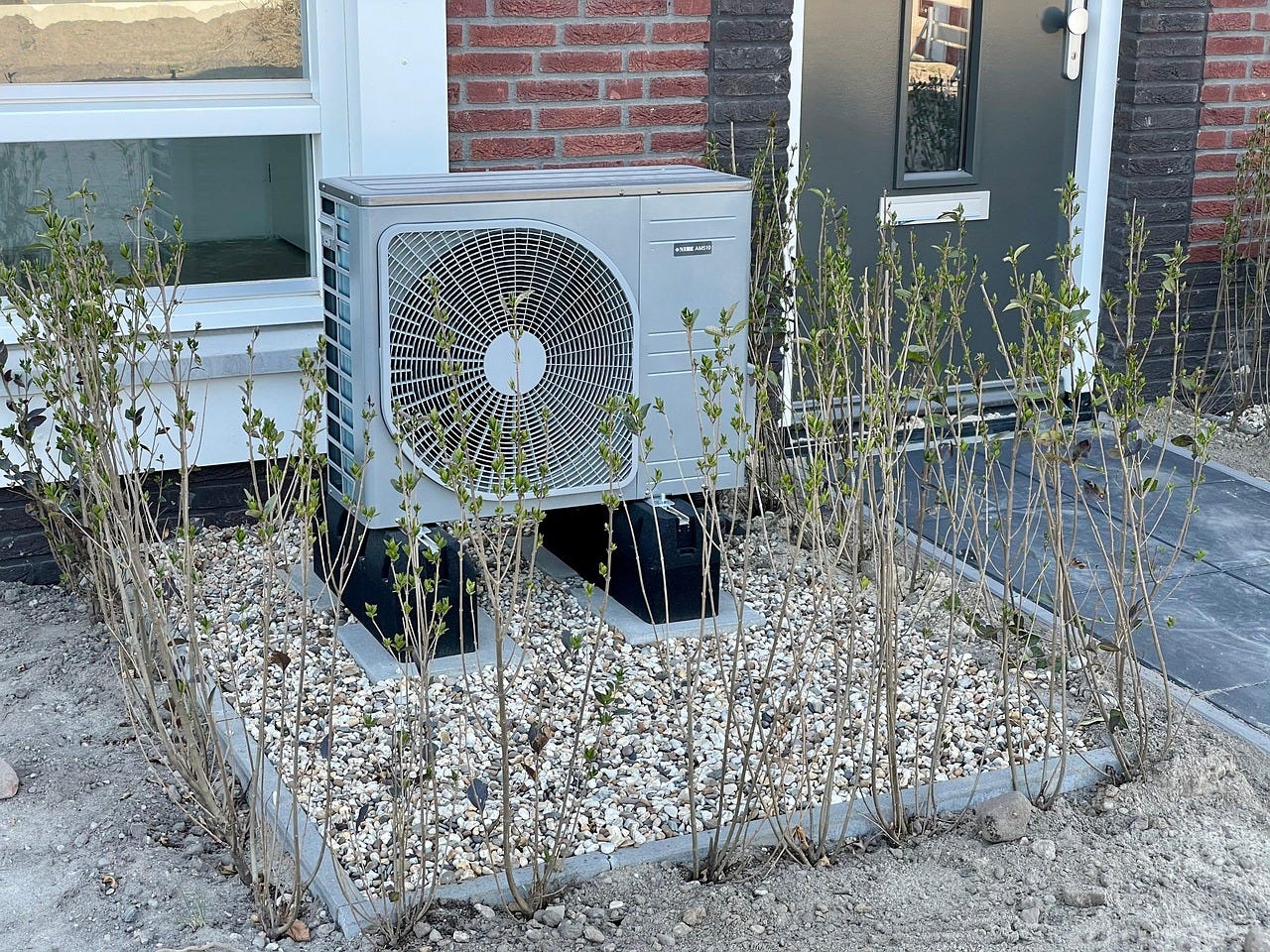
Europe has legally committed to phasing out fossil boilers. Heat pumps are booming. Policy targets are climbing. And yet, if you’re an ordinary homeowner with a small garden and a tight budget, the most efficient heating solution on the market is practically unreachable.
Ground-source heat pumps outperform air-source systems. They’re quieter. More stable in winter. More grid-friendly. But installing one still means inviting a 20-ton drilling rig, designed decades ago for oil fields, into your backyard.
It’s expensive. Logistically absurd. And in dense European cities, often impossible.
That friction isn’t just inconvenient. It’s systemic. Europe is projected to fall short of its heat pump targets by 15 million units. Behind every missed unit is a homeowner who looked at the upfront cost and walked away.
For an Icelandic mechanical engineer with geothermal in his bloodline, Sævar Einarsson, that gap wasn’t just a market inefficiency. It was personal.
Instead of asking how to slightly improve legacy drilling rigs, he asked a more dangerous question:
What if we’ve been using the wrong machine all along?
That question became FlexDrill, an ultra-compact hydraulic impact drilling system with a 1m² footprint, designed to turn geothermal installation from a construction project into something closer to an appliance upgrade.
Because if the world is serious about heat decarbonisation, we don’t just need better policy.
We need better tools.
We sat down with Sævar to dig deeper into how Flexdrill is changing the game for urban geothermal.
What is FlexDrill, and what mission are you racing to achieve in Europe’s heat transition?
Flexdrill is an ultra-compact, hydraulic impact drilling system designed to revolutionize residential geothermal installations and change the economics for the homeowner. We’re aiming to close the projected 15-million unit shortfall in Europe’s heat pump targets by making ground-source heating accessible and affordable.
What’s the biggest gap in geothermal deployment that you realised no one was solving, and why did it matter personally?
While ground-source heat pumps are the most efficient solution, residential drilling is still relying on heavy 1970s technology that’s incredibly expensive and often damages your property. Solving this matters to me personally not only because I always look for implementing the best solutions as widely as possible, but also because I have a family heritage of geothermal engineering.
Tell us about that heritage.
My grandfather, Ísleifur Jónsson, was the head of the State Drilling Company in Iceland for decades, and became the go-to lead engineer for difficult operations worldwide. He pioneered geothermal drilling for the UN, from El Salvador to Kenya, and even led the project that brought the famous geyser back to life in 1963. I saw his approach as an intense motivator and without knowing it, I adopted his ‘can-do’ attitude of simplicity. That’s why I became an engineer.

When did geothermal click as a massive, overlooked climate lever?
The click happened when I considered buying a house here in Vienna and realised that there are no good HVAC options for the regular homeowner. Despite fossil boiler bans, the ‘Spark Gap’, the high price of electricity versus gas, means that geothermal heating, which is highly efficient, is really the only way to protect homeowners from high energy bills, but as of now it remains inaccessible to them.
What’s the bottleneck you solve?
The massive rigs from the oil industry still are the go-to for geothermal. I realised that 50 years later we still use the same principles to drill, but better methods have been developed in other fields. How is it that we’re still trying to cram these 20-ton machines into small European backyards? The key moment happened in March when an engineer from a major utility company told me this was really needed.
What did others overlook?
I saw the industry trying to shrink massive rotary rigs that all use the same static principle. My insight was from the tools from F1 pit stops that deliver the same forces had me questioning why we needed a large surface rig at all.
If you decouple the torque from the surface, generating the rotation at the bottom of the hole using hydraulics, you eliminate the need for the heavy surface mast entirely. And with it goes 90% of the complexity.
What are you most proud of technically?
The fact that hydrostatic pressure increases as you go deeper means you can drill with a simple plastic pipe. We detach the motor and leave the pipe in the ground to act as the heat exchanger casing. It eliminates an entire step of the installation. I’m most proud of this dual-use principle.
FlexDrill already holds a PCT patent, with five sub-patents planned, critical in a sector dominated by legacy manufacturers.
IP protection matters substantially because large corporations would otherwise be able to copy our design without restrictions.
They are bottlenecked by the capital cost of rigs and the shortage of specialised crews. Our system costs a fraction of that and is designed to be operated by a technician.
You have €1M in LOIs already. Did that surprise you?
We’ve done some minimal outreach and it really surprised us how ready these companies were to adopt our approach. The ROI is clear on their end, so all it takes is a proof of concept.
Who feels the pain most acutely?
It is undoubtedly the residential retrofit market for single-family homes. There are 70 million of these in the EU, and they’re stuck with gas or higher bills unless they have the means to manage a construction project.
What makes customers say yes instantly?
The ROI is clear when you understand the logistics of the standard drilling systems and compare that to our impact system. No other system can guarantee lower monthly bills without substantial investments.
What is your roadmap to investment and fundraising?
FlexDrill is currently at TRL 5 and raising €500K pre-seed, having already secured €263K.
What defines success over the next 12 months?
This funding will allow us to finalise the full-scale prototype, complete our full depth 200-meter pilot boreholes, secure CE certification, and deliver the first 5 commercial units to our waiting customers. We aim for direct break-even and sustainable profitability by mid-2027.
Pilot deployments are planned in partnership with roots.energy and the University of Zagreb, alongside five early adopters in Austria in 2026.
Tell us about your plans for scaling up?
Initially, we will sell rigs directly to build up our business model and validate the system at scale. However, our roadmap includes a leasing model to lower the CAPEX barrier for smaller HVAC installers, allowing them to bring drilling in-house. This is crucial to unlock the million-home scale.
Why will urban geothermal become unavoidable?
Air-source heat pumps struggle with efficiency during cold snaps and noise regulations in dense cities. Geothermal is the only way to provide baseload stability and urban comfort without overburdening the electric grid.
If you could change one regulation tomorrow?
Financial incentives for decarbonising home heating have been disappearing in several EU countries. I’d bring them back on an EU level to promote the highest efficiency systems.
Whats the hardest part of building hardware?
The assumption that hardware is expensive. People don’t even consider the fact that it’s a modular approach inherently designed to eliminate those downsides.
What mindset ritual keeps you going?
One step at a time. I like thinking in modules, where I can break down a seemingly unachievable goal into clearly defined criteria for success.
Who is your role model?
My grandfather, Ísleifur Jónsson. He dedicated his life to giving the world access to geothermal energy. I want to continue that mission.
……………………………..If Saevar could teleport himself into the future and be anywhere, doing anything, he’d be “in a dense European city in 2040, enjoying heating and cooling, knowing we helped close the 15-million unit gap and secured Europe’s heating future.”